
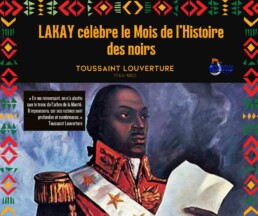
The man who made empires tremble, the great slave-owning powers, and paved the way for freedom
The Genius of Liberty Who Shook the World
Toussaint Louverture (1743–1803) is one of the figures one of the most extraordinary figures in universal history. A former slave who became a world-renowned political and military strategist, he was the principal architect of the Haitian Revolution and one of the first black leaders to successfully challenge the great European armies.
His name has become synonymous with:
courage, intelligence, leadership and an indomitable fight for human freedom.
✊ A plantation child who became master of his own destiny
Born a slave in Saint-Domingue, Toussaint is distinguished by:
- his great intelligence,
- his iron discipline,
- its organizational capacity,
- his profound knowledge of the land and of men.
He learned to read and write as an adult, which was exceptional in a world where education was forbidden to slaves.
His journey embodies the idea that dignity and genius know no social barriers.
⚔️ The strategist who defied empires
When the general insurrection broke out in 1791, Toussaint Louverture quickly became one of the Revolution's most brilliant leaders.
His military genius is manifested by:
- bold strategies,
- an exceptional art of negotiation,
- its ability to unite the most diverse forces,
- rigorous discipline.
It pushes back successively:
- French troops,
- the Spanish armies,
- British forces,
and became Governor General of Saint-Domingue in 1801, de facto leading the colony with an innovative political vision.
🌍 A visionary of universal freedom
For Toussaint Louverture:
- Freedom was non-negotiable.,
- Equality had to be guaranteed for all.,
- Slavery should never exist again.,
- Discipline, order, and education were essential to the development of the country.
He is writing a Constitution inspired, abolishing slavery forever and laying the foundations for a new society based on human dignity.
⚠️ A tragic destiny, an eternal light
Arrested by Napoleon Bonaparte's troops in 1802, Toussaint was deported to the icy mountains of the French Jura, where he died in captivity.
But his words — and his struggle — reveal the greatness of his spirit:
You can imprison a man, but not an idea.
A few months after his death, his legacy inspired the indigenous troops who would lead Haiti to independence in 1804.
✨ A beacon for Black History Month
Toussaint Louverture embodies:
- Leadership born of resilience,
- the heroic struggle against injustice,
- the determination to break the chains,
- the capacity of black people to change the course of world history.
His fight paved the way:
- at the independence of Haiti,
- with the fall of slavery in the Americas,
- to the recognition of human dignity for millions of human beings.
📜 Inspirational quote attributed to Toussaint Louverture
«"By overthrowing me, they have only cut down the trunk of the tree of liberty. It will grow back, for its roots are deep and numerous."»
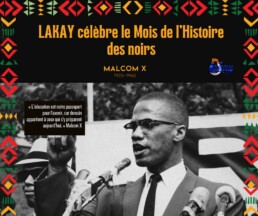
The Unwavering Voice of Black Pride and Justice
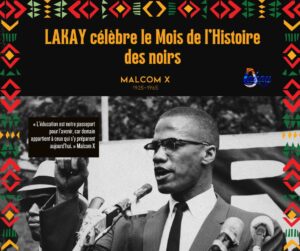 Malcolm X (1925–1965) is one of the most powerful, courageous, and influential figures in African American history.
An exceptional speaker, revolutionary thinker, defender of black dignity and activist against systemic racism, he gave millions of people a new consciousness: that of pride, resistance and self-determination.
His message transcends borders: Malcolm X remains a global symbol of truth, courage, and personal transformation.
✊ A journey forged in adversity and resilience
Born Malcolm Little, he grew up in a context marked by:
- the racist violence of the Ku Klux Klan,
- the tragic assassination of his father,
- economic insecurity,
- structural injustices.
After a difficult youth and imprisonment, he reinvented himself by studying, reading and rebuilding his intellectual and spiritual identity.
This transformative journey makes him a model of resilience and emancipation.
📢 A speaker who awakened consciences
As a leader within the Nation of Islam, Malcolm X became one of the most powerful orators of the 20th century.
He advocates:
- black pride,
- regaining control over one's own history,
- denouncing institutional racism,
- economic and community autonomy,
- the defense of human rights.
His direct and courageous speech breaks taboos, exposes injustices and gives a strong voice to those whom history wanted to silence.
🌍 A global human rights activist
After his pilgrimage to Mecca in 1964, Malcolm X broadened his vision:
- He adopts a more international perspective.,
- opens up to Afro-diasporic unity,
- and fights to situate the struggle of African Americans within that of oppressed peoples throughout the world.
He met with African and Caribbean leaders, and founded the Organization of Afro-American Unity to promote a global justice movement.
🔥 A legacy that transcends generations
Assassinated in 1965 at only 39 years old, Malcolm X left an immense legacy:
- on civil rights movements,
- on Black Power,
- on pan-African struggles,
- on contemporary reflections on racism and black dignity.
His name is now synonymous with truth, courage, personal transformation, and political awareness.
✨ A beacon for Black History Month
Malcolm X reminds us that:
- Dignity is never negotiable.,
- Knowledge is a powerful weapon.,
- Black people must stand up.,
- Personal transformation can change a nation.
His life is a call to resist, to educate oneself, to organize, and to assert one's worth in a world still marked by injustices.
📜 Inspiring quote from Malcolm X
«"Education is our passport to the future, because tomorrow belongs to those who prepare for it today."»
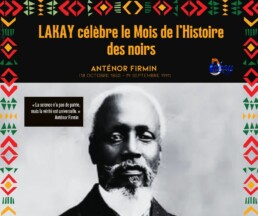
Anténor Firmin - The Visionary Who Rehabilitated Black Dignity through Science
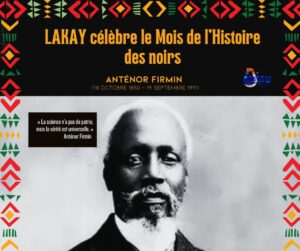 Anténor Firmin (1850–1911) is one of the most brilliant Haitian intellectuals and a major figure in Black thought worldwide. An anthropologist, diplomat, politician, and humanist, he is best known as the author of one of the most revolutionary works of the late 19th century:
«"On the Equality of the Human Races" (1885).
In this historical work, Firmin scientifically deconstructs the biological racism that dominated European science in his time and forcefully affirms the fundamental equality of all peoples.
For the African diaspora, Firmin is a pioneer in the intellectual fight against racial discrimination.
✊ A bold thinker in a world hostile to Black people
At a time when racist theories sought to justify the inferiority of Black people, Firmin chose to respond not with emotion, but with... science :
- anthropology,
- linguistic,
- history,
- methodological critique,
- empirical observation.
He demonstrates that human races are not valid biological categories and that African civilizations have played a major role in world history.
His work precedes and inspires the great figures of Pan-Africanism and Negritude.
🧠 A rigorous, multidisciplinary intellectual
Firmin was a member of the Anthropological Society of Paris, where he dared to publicly contradict the racist theories of the time.
His thinking is characterized by:
- an impeccable scientific method,
- a desire for truth,
- a deep commitment to justice,
- a universalist vision of humanity.
In Haiti, he also became involved in politics, defended republican values and campaigned for a state based on fairness and human dignity.
🌍 A precursor of intellectual Pan-Africanism
Long before Césaire, Diop, or Du Bois, Firmin developed a modern philosophy based on:
- the equality of peoples,
- the promotion of African civilizations,
- the pride of being black,
- the critique of imperialism,
- the need for Black people to control their narrative.
His work paved the way for many Afro-diasporic schools of thought.
✨ A beacon for Black History Month
Anténor Firmin reminds us that:
- Dignity is also defended through knowledge.,
- Black people have played a fundamental role in human civilization.,
- Science can be a tool for liberation.,
- Ideas can overturn even the most deeply ingrained prejudices.
His work is a call for pride, intellectual rigor, and recognition of the African contribution to humanity.
📜 Inspiring quote from Anténor Firmin
«"Science has no homeland, but truth is universal."»

Thomas Sankara - The African Che Guevara
The President of the Righteous and the Path to African Dignity 
Thomas Isidore Noël Sankara (1949–1987), president of Burkina Faso from 1983 to 1987, is one of the most admired figures of contemporary Pan-Africanism. A visionary revolutionary, an upright statesman, a committed feminist, and a staunch advocate for social justice, he remains a universal symbol of courage, honesty, and transformation.
For Africa and for the entire black diaspora, Sankara embodies the dream of ethical and liberating leadership.
✊ A leader who restored dignity to his people
Having come to power in 1983, Sankara radically changed the destiny of the country:
- he renames Upper Volta Burkina Faso, “the land of upright men”,
- He is launching large-scale vaccination and education programs,
- He fights against corruption and privilege.,
- It encourages food and economic self-sufficiency,
- It promotes African cultures and national pride.
His government proves that it is possible to govern differently: with rigor, simplicity and transparency.
🌍 A pillar of modern Pan-Africanism
For Sankara, the freedom of an African country only has meaning if the whole of Africa is liberated.
He argues:
- the unity of the continent,
- cooperation between African countries,
- the break with dependencies inherited from colonization,
- development based on local resources.
His speeches, at the UN as well as at African summits, remain among the most powerful pleas ever made for the sovereignty of black peoples.
👩🏾🦱 A feminist before her time
Thomas Sankara was one of the first African heads of state to make gender equality a political priority.
He publicly states that:
- Women's emancipation is essential to development.,
- No revolution is possible without them.,
- Violence and discrimination must be fought.,
- Women must have access to work, training, and decision-making.
Her commitment in this area remains a reference for African and Afro-diasporic feminist movements.
🔥 An indestructible legacy
Sankara, assassinated on October 15, 1987, only led Burkina Faso for four years.
But in four years, he left:
- a global lesson in integrity,
- a political vision based on dignity,
- an example of humble and courageous leadership,
- a legacy that inspires young people across Africa, the Caribbean and the diaspora.
Today, his name is associated with truth, courage, and social justice.
✨ A beacon for Black History Month
Thomas Sankara reminds us that:
- Liberation is a collective act.,
- Dignity is priceless.,
- Black people can transform their destiny.,
- Honesty and courage are radical forms of revolution.
He embodies the dream of a world where leadership is entirely at the service of the people.
📜 Inspiring quote from Thomas Sankara
«"You can kill a man, but you cannot kill his ideas."»
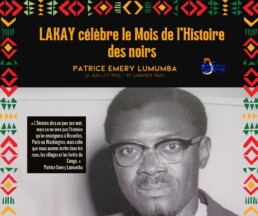
Patrice Lumumba: A flame for black freedom
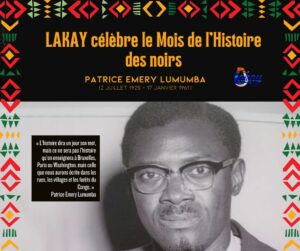 The Unwavering Voice of African Freedom
Patrice Emery Lumumba, his real name : Elias Okit'Asombo (July 2, 1925 – January 17, 1961, assassinated) is one of the most emblematic figures of the 20th-century anti-colonial struggleᵉ century. The first Prime Minister of the independent Democratic Republic of Congo, he embodies the courage, dignity and deep aspiration of African peoples for sovereignty and self-determination.
His name is now associated with justice, freedom, and the fight against all forms of domination.
✊ A leader of African dignity
Lumumba emerged in a context marked by:
- Belgian colonial domination,
- systemic inequalities,
- political repression,
- the growing desire for independence.
A powerful and unifying speaker, he deeply believes:
- in the unity of the Congo,
- in the promotion of African identities,
- in economic and political sovereignty,
- in the equality of all citizens.
His commitment is based on a clear vision: Africa cannot be free if it does not control its destiny.
First Prime Minister of an independent Congo
On June 30, 1960, when the Congo gained independence:
- Lumumba becomes the country's first head of government,
- It represents a historic turning point for Africa.,
- He raises a firm voice against the humiliations of the past and for restored dignity.
His Independence Day speech — a courageous plea against colonial injustice — marked world history and remains a symbol of truth and dignity.
🌍 A symbol of Pan-Africanism
For Lumumba, the independence of the Congo was not an isolated event:
This is a step towards the liberation of the entire African continent.
His ideals have an influence:
- liberation movements in southern Africa,
- Pan-Africanist intellectuals,
- Afro-descendant struggles from around the world.
He advocates for solidarity between African nations and the need to build independent, strong and united states.
⚠️ A tragic destiny that became an indestructible legacy
Lumumba was overthrown and assassinated in January 1961, just a few months after independence.
But far from erasing his influence, his untimely death made him:
- a martyr for African freedom,
- a universal symbol of resistance to oppression,
- a founding figure in the struggles against imperialism.
Even today, his name resonates as a call for political courage and integrity.
✨ A beacon for Black History Month
Patrice Lumumba embodies:
- black pride,
- the struggle for sovereignty,
- the importance of historical justice,
- confidence in the ability of African peoples to govern themselves.
He reminds us that Black history is made up of men and women who risked their lives for collective dignity.
📜 Inspirational quote (attributed to Patrice Lumumba)
«"History will one day have its say, but it will not be the history taught in Brussels, Paris, or Washington, but the one we will have written in the streets, villages, and forests of the Congo."»
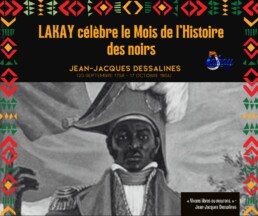
Jean-Jacques Dessalines - The Founder of Black Liberty
The Founder of Black Freedom
Jean-Jacques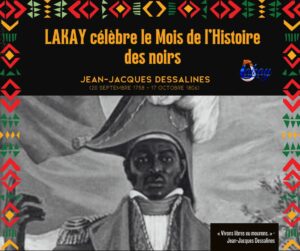 Dessalines (1758–1806) is one of the most imposing figures in world history. An extraordinary military leader, visionary strategist, and founding father of Haiti, he led the only enslaved people in the world to overthrow a colonial empire and create the the first independent Black republic in modern history.
Dessalines is more than a Haitian hero:
he is a global symbol of resistance, dignity and freedom for all Black people.
✊ A child of servitude who became a liberator
Born a slave in Saint-Domingue, Dessalines experienced the brutality of the colonial system.
But it is forged in forced labor, discipline, and resilience.
When the Haitian Revolution broke out, he emerged as one of its greatest leaders.
Through courage, strategic intelligence and total determination, he becomes the soul of the fight against oppression.
⚔️ An unparalleled military strategist
Dessalines is distinguished by:
- exceptional tactical vision,
- extraordinary endurance,
- leadership capable of galvanizing the masses,
- a deep understanding of asymmetric warfare.
He played a crucial role in the fight against the French army, whose troops were among the most feared in the world.
Under his leadership, the indigenous army won the decisive victory in 1803, sealing the country's freedom.
🌍 The pioneer of black freedom in the world
THE 1ᵉʳ January 1804, In Gonaïves, Dessalines proclaims the independence of Haiti.
This gesture not only overturned colonial domination, but also destroyed the then universally accepted idea that black people were destined for servitude.
Haiti then becomes:
- the first State to definitively abolish slavery within its territory,
- a refuge for oppressed peoples,
- a source of inspiration for Afro-descendant struggles in America, Africa and the Caribbean.
Dessalines thus opened a new era in the history of humanity.
🛡️ A staunch defender of human dignity
Dessalines firmly believed:
- in the sacred value of freedom,
- in the sovereignty of his people,
- in the absolute equality of human beings,
- in the importance of building a proud and self-reliant country.
His leadership is not based solely on war, but on a vision of social justice and redistribution for the benefit of the formerly oppressed.
✨ A beacon for Black History Month
Jean-Jacques Dessalines embodies:
- unwavering resistance,
- victory against injustice,
- the courage of those who refuse domination,
- the power of African memory in the diaspora.
For Black History Month, he reminds us that Freedom is not received, it is conquered. — and that Black people have given the world one of the greatest examples of human liberation.
📜 Inspirational quote (attributed to Dessalines)
«"Let us live free or die."»
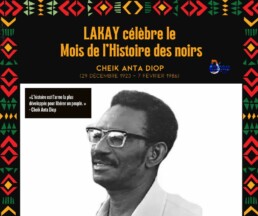
Cheikh Anta Diop - Restoring history, liberating consciences
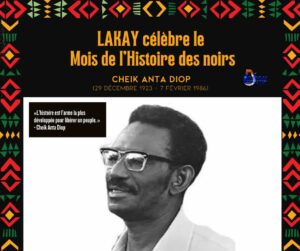 Cheikh Anta Diop (1923–1986) He is one of the most luminous figures of modern African intellect. A historian, physicist, anthropologist, linguist, and Egyptologist, he dedicated his life to a fundamental mission: to restore the historical truth about African civilizations and demonstrate their essential contribution to universal heritage.
His work has become the intellectual foundation of contemporary Pan-Africanism and a pillar of the revaluation of Black identity in the world.
✊ A pioneer of historical truth
In a colonial context where African history was falsified or denied, Diop scientifically demonstrates:
- the profound cultural unity of Africa,
- the central role of African civilizations in Antiquity,
- the black origin of ancient Egypt,
- the long history of African scientific and cultural genius.
His theories revolutionized the humanities and gave black people a solid, reasoned, and deeply rooted memory.
🧠 An exceptional multidisciplinary mind
Diop embodies a rare mastery of multiple fields:
- history,
- nuclear physics,
- linguistic,
- anthropology,
- sociology,
- philosophy.
He mobilizes the exact sciences as much as the humanities to establish his demonstrations, which gives his work an undeniable power.
🌍 An architect of the African renaissance
For Diop, rediscovering African history is not an academic exercise:
it's a condition for the liberation and development of the continent.
He argues for:
- the political unity of African states,
- a common African language,
- an independent science policy,
- the promotion of African cultural values.
His work has inspired generations of intellectuals, leaders, and young activists throughout the diaspora.
🔥 A beacon for Black History Month
Cheikh Anta Diop reminds us that:
- Knowledge is an instrument of dignity.,
- History is a battleground.,
- African identity is rooted in powerful and creative civilizations,
- No people can move forward if they ignore their past.
His legacy continues to illuminate the struggles for justice, cultural pride, and the rebuilding of self-esteem in Afro-descendant communities.
📜 An inspiring quote from Cheikh Anta Diop
«"History is the most sophisticated weapon for liberating a people."»
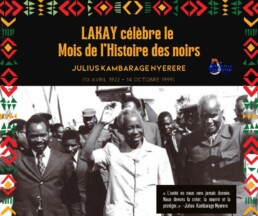
Julius Kambarage Nyerere - The Sage of the African Continent
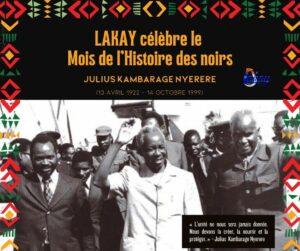 The Sage of the African Continent
Julius Kambarage Nyerere (1922–1999), the first president of independent Tanzania and a major figure in Pan-Africanism, is one of the most respected African leaders of the 20th century. A visionary, humanist, educator, and builder, he dedicated his life to defending social justice, human dignity, and the unity of African peoples.
Nicknamed “Mwalimu”, which means teacher In Swahili, he remains a symbol of wisdom, modesty, and moral leadership for the entire Black diaspora.
✊ An architect of freedom and unity
Nyerere played a decisive role in Tanganyika's independence in 1961, which he wished to build upon:
- equality for all,
- community solidarity,
- the construction of a just and stable state,
- the fight against poverty and ethnic divisions.
He then participated in the creation of Tanzania, born from the union of Tanganyika and Zanzibar. This peaceful merger remains one of the most remarkable examples of national unity in Africa.
🌍 A pillar of Pan-Africanism
Nyerere is one of the greatest advocates of African unity.
He actively participated in the creation of the’Organization of African Unity (OAU) and courageously supports the liberation movements of the continent:
- in South Africa,
- in Mozambique,
- in Zambia,
- in Angola,
- in Zimbabwe.
For him, no African country is free as long as others are still under domination.
His commitment makes Tanzania a welcoming land for revolutionaries from across the continent.
📚 Education as the foundation of freedom
Before becoming president, Nyerere was a teacher, and this vocation profoundly influenced his leadership.
He believes in the transformative power of education to:
- to free consciences,
- to develop nations,
- to build a fair society.
Under his presidency, Tanzania achieved one of the strongest expansions of primary education in Africa.
🌱 Ujamaa: A vision of social justice
Nyerere proposes a social model based on African traditions of cooperation: the’ujamaa (extended family).
Although this model has faced challenges, it is based on fundamental values:
- solidarity,
- equity,
- refusal of exploitation,
- collective development.
This philosophy continues to influence thinking on African development.
✨ A precious legacy for Black History Month
Julius Nyerere plays:
- ethical leadership,
- integrity-based governance,
- a profound pan-African vision,
- the conviction that the future of Africa rests on unity and justice.
For Black History Month, he reminds us:
- that dignity is a right,
- that solidarity is a strength,
- that education is a weapon of transformation,
- that the African continent has given the world wise men and builders.
📜 An inspiring quote from Julius Nyerere
«"Unity will never be given to us. We must create it, nurture it, and protect it."»
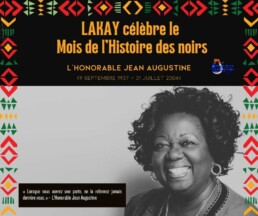
The Honourable Jean Augustine, a major figure in Canadian history.
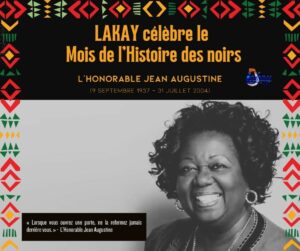 Born Simon on September 9, 1937, the Honourable Jean Augustine was the first Black woman elected to the House of Commons of Canada in 1993., the first black woman appointed to the Federal Cabinet (2002), Ontario's first female equity commissioner (2007-2015), the initiator of the Motion recognizing February as Black History Month in Canada (motion adopted in 1995). She invites each and every one of us to believe in our ability to change the world one gesture, one cause, one conviction at a time:
«"Have a passion and know what it is. Take a risk. Seek out, and find, mentors and role models. Don't accept mediocrity. Have faith that you can change the world."»
— The Honourable Jean Augustine
A pioneer of equity and Black history in Canada
The Honourable Jean Augustine She is one of the most prominent figures in contemporary Canadian history. An educator, community activist, social leader, and politician, she opened essential doors for the representation of Black Canadians.
In 1993, she became the first black woman elected to the House of Commons of Canada, a historic moment that marks a major step forward for inclusion and diversity in the democratic life of the country.
✊ A life dedicated to public service and equality
Before entering politics, Jean Augustine worked as a teacher and then a school principal, and was actively involved in:
- the defense of women's rights,
- the empowerment of Black communities,
- the fight against poverty,
- community development.
His career is distinguished by one constant: uplifting others and expanding the realm of possibilities for marginalized groups.
📚 The driving force behind Black History Month in Canada
One of her most significant contributions came in 1995, when she tabled a motion in the House of Commons aimed at recognizing Black History Month in Canada.
The motion is adopted unanimously, making Canada one of the few countries to officially dedicate a month to celebrating the history, struggles and contributions of Black communities.
Thanks to it, every year thousands of schools, organizations and institutions can:
- to celebrate the contributions of Black Canadians,
- to celebrate historical heroes,
- to reflect on social equity,
- to promote cultural diversity.
🌍 An ambassador for social justice
Beyond his parliamentary role, Jean Augustine is making progress:
- the fight against discrimination,
- access to education,
- women's rights,
- the representation of minorities.
After her political career, she continues to support initiatives for youth, women's empowerment, and the inclusion of Afro-descendant communities.
His legacy is celebrated today throughout the country, notably by the Jean Augustine Chair in Education, Community and Diaspora at York University.
✨ Why it is essential during Black History Month
Jean Augustine embodies:
- the courage to break down barriers,
- the importance of representation,
- the strength of Black communities in building Canada,
- the power to transform a society through leadership, education and commitment.
Her journey is a reminder that Black History Month is not just a commemoration of the past, but also a a constant invitation to build a fairer and more inclusive future.
📜 Inspirational quote (attributed to Jean Augustine)
«"When you open a door, never close it behind you."»
INSPIRING BLACK PERSONALITIES THROUGHOUT HISTORY
 There is probably no ignominy on this earth that the black world has not suffered: slavery, dehumanization, the denial of its identity, the deliberate erasure of its history, the imposed silence on its contribution to humanity, the denial of its culture, the minimization of its genius, rejection, the exploitation of its strength and the lack of recognition… the list of injustices is endless.
And yet, he remained standing. Standing in the storm. Standing in pain. Standing with dignity.
Throughout the centuries, courageous voices have risen, sometimes alone, to light the way. Never have the worthy sons and daughters of Africa, whether on the continent or exiled, accepted with their arms crossed the destiny that tyrants wanted to impose upon them. Never!
It is in this spirit that we have chosen to present 28 Black personalities, during the 28 days of FEBRUARY recalling Black History Month, one personality per day.
Twenty-eight individuals who, through their struggle, determination and sacrifices, have bequeathed a precious legacy to future generations. A legacy of freedom, thought, culture, and hope.
These portraits are not just retrospectives: they are beacons, invitations to walk higher, stronger, prouder.