
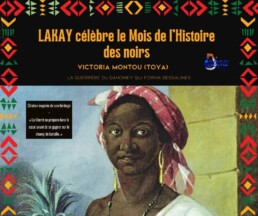
Victoria Montou (TOYA) - The Dahomey Warrior who trained Dessalines
The Warrior Woman of Dahomey who trained Dessalines
Victoria Montou, nicknamed Toya, She is one of the most powerful and overlooked figures of the Haitian Revolution. Originally from Dahomey (present-day Benin), she was reportedly a seasoned warrior—possibly related to the famous A goji berries, the kingdom's female military unit.
Deported to Saint-Domingue, she became a woman of great authority, a fighter, an educator, and one of the determining influences in the formation of the future emperor. Jean-Jacques Dessalines.
For Haiti and for the Black diaspora, Toya Montou embodies the strength, courage, dignity and transmission.
✊ An African warrior who became the spiritual mother of Dessalines
According to historical tradition, Toya Montou played a fundamental role in Dessalines' childhood:
- She trains him in combat strategies,
- He learns discipline.,
- He instilled in him the values of courage and leadership.,
- It prepares him mentally for resistance.
She is not a secondary figure: She is one of the sources of Dessalines' bravery, a pillar in the continuity of the African warrior heritage in Haitian soil.
⚔️ A freedom fighter
During the Haitian Revolution, Toya Montou did not remain on the sidelines.
She actively participates:
- to the clashes against the colonial army,
- to the strategic operations of the insurgents,
- to the care and support of combatants,
- to the mobilization of servile communities.
Known for her unwavering determination, she was even captured at one point during the war, refusing to betray, refusing to submit.
His career testifies to the presence and role crucial for African and Afro-descendant women in the struggle for freedom.
🌍 A mother of the Haitian nation
Toya Montou embodies a transcontinental legacy:
- African female heroism,
- resistance to oppression,
- intergenerational transmission,
- the building of a free nation.
She is one of those women whose names have long been marginalized, but whose actions profoundly shaped the destiny of the world's first independent black country.
✨ A powerful symbol for Black History Month
By celebrating Toya Montou, we honor:
- Haiti's African roots,
- the crucial role of women in the struggles for freedom,
- the warrior and intellectual heritage passed down through generations,
- the memory of the women resistance fighters whose history has sometimes been erased.
She reminds us that Haiti's freedom was built thanks to women as well as men., and that the strength of the black world lies in the memory of its heroines.
📜 Inspirational quote (inspired by his legacy)
«"Freedom is prepared in the heart before it is won on the battlefield."»
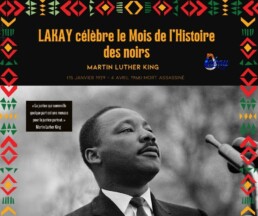
Martin Luther King - The Universal Voice of Justice and Hope
The Universal Voice of Justice and Hope
Martin Luther King Jr. (1929–1968) is one of the world's greatest symbols of human dignity. A pastor, visionary orator, strategist of the civil rights movement, and Nobel Peace Prize laureate, he made nonviolence a political weapon capable of shaking institutional racism in the United States and inspiring millions of people around the world.
His message transcends generations. To love, to hope, to resist, and to stand up for humanity.
✊ A leader who transformed history
MLK became involved in the fight as early as the 1950s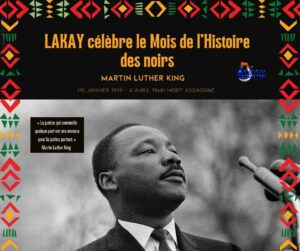 you against racial segregation.
He quickly became one of the most influential figures in the civil rights movement thanks to:
- his bold political vision,
- his incomparable eloquence,
- his profound faith in the dignity of all human life.
Along with other leaders, he is leading the fight that leads to:
- the official end of segregation,
- the recognition of the right to vote for African Americans,
- the adoption of historic equality laws.
📢 A master of words and non-violence
Inspired by Gandhi, King adopted a strategy based on:
- nonviolence,
- civil disobedience,
- mass mobilization,
- the moral power of public testimony.
His speeches – including the famous “I Have a Dream” – carry a universal message:
A just society is possible if everyone rises up to build it.
🕊️ A dream that goes beyond the American fight
Martin Luther King Jr. reminds the Black world that:
- Freedom is an inalienable right.,
- Racism is not inevitable.,
- Love and justice are revolutionary forces.,
- Human dignity must be defended everywhere.
Her actions inspire struggles in Africa, the Caribbean, and throughout the Afro-descendant diaspora for equality and recognition.
🌍 A timeless legacy
For Black History Month, Martin Luther King Jr. is a powerful reminder that:
- Hope can change history.,
- Peaceful resistance is an irrepressible force.,
- Social justice is everyone's business.,
- Each individual can play a role in transforming the world.
Assassinated in 1968, his message remains alive: As long as injustice exists, his dream will continue to call for action.
📜 An inspiring quote from Martin Luther King Jr.
«"Justice that lies dormant somewhere is a threat to justice everywhere."»
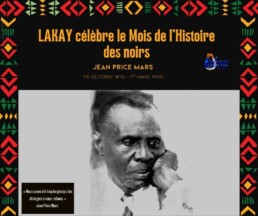
Jean Price Mars - The Father of Haitian Cultural Identity
The Father of Haitian Cultural Identity
Jean Price Mars (187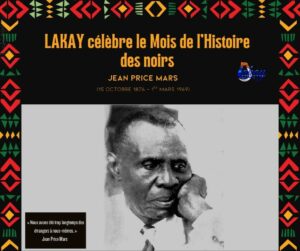 (6–1969) is one of the greatest Haitian thinkers of the 20th centuryᵉ century. Doctor, diplomat, ethnologist, writer and philosopher, he reconciled Haiti with its African roots and restored to the Haitian people pride in their cultural heritage.
For the Black world, it remains a builder of conscience, a pioneer of self-respect, and an essential voice for dignity.
✊ A defender of the value of the Haitian people
While many looked down on popular culture and traditions of African origin, Price Mars reminds us that:
- Voodoo,
- the tales,
- proverbs,
- popular beliefs,
- and the Creole language
are the essential pillars of Haitian identity, and not shameful remains.
He calls it the’“indigenism”, an intellectual movement that advocates for the promotion of Haiti's national culture and African roots.
📚 «"Thus spoke the uncle": an awakening of identity
His major work, Thus spoke the uncle (1928), revolutionized the Caribbean intellectual landscape.
In this book, PriceMars demonstrates:
- the spiritual wealth of the Haitian people,
- the importance of Africa in the formation of the nation,
- the historical error of those who deny these legacies,
- the need to understand the people in order to better serve them.
This text inspires not only Haiti, but also international Black thinkers, and paves the way for movements like the Negritude.
🌍 A pioneer of Haitian ethnology
By methodically studying popular traditions, PriceMars becomes:
- the first major Haitian ethnologist,
- a researcher deeply respectful of local knowledge,
- a leading figure in the scientific understanding of Black Caribbean culture.
He shows that African traditions are not an obstacle to progress, but a force of civilization and a legacy to celebrate.
🔥 A voice of dignity for the Black world
At a time when colonial thinking devalued Black people, PriceMars states:
- the greatness of Africa,
- the complexity of Black civilizations,
- the legitimacy of Afro-descendant cultures.
He opposes a vision of emancipation based on knowledge, memory, and truth.
His influence extends beyond Haiti: he becomes an intellectual reference throughout the Caribbean, in Africa, and in the global diaspora.
✨ A legacy for today
For Black History Month, Jean PriceMars reminds us:
- that knowing one's roots is an act of resistance,
- that culture is a force for liberation,
- that dignity begins with self-recognition,
- that Africa lives on through its scattered children.
He remains a beacon for all those working to rebuild self-esteem in Black communities.
📜 Inspirational quote from PriceMars
«"For too long, we have been strangers to ourselves."»
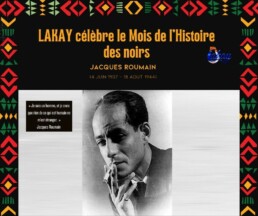
Jacques Roumain - The Poetic Voice of Haiti and its People
The Poetic Voice of Haiti and its People
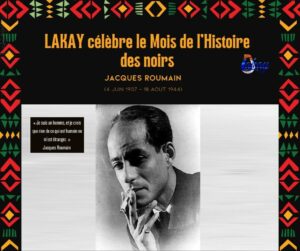 (1907–1944) is one of the most luminous figures in Haitian literature and thought. A poet, novelist, ethnologist, journalist, and political activist, he dedicated his short life to defending social justice, human dignity, and the profound beauty of the Haitian soul.
Despite his death at only 37 years old, his influence remains immense, in Haiti as in the entire black world.
✊ An intellectual committed to justice
From a very young age, Roumain rebelled against injustice, the exploitation of peasants, and foreign domination.
He campaigns for:
- the dignity of the Haitian people,
- the promotion of popular culture,
- social equality,
- intellectual and political sovereignty.
He founded the Haitian Communist Party and uses literature as a weapon to denounce oppression and raise awareness.
📚 A writer of rare power
His most famous work, «"Masters of the Dew" (1944), is an iconic novel of world literature.
Through Manuel's story, Roumain sings:
- the unity of the people,
- solidarity,
- the fight against poverty,
- the possibility of a better future.
His poetry, meanwhile, is a cry of love for Africa, freedom, and humanity.
Roumain is among the pioneers of the Negritude, alongside Césaire and Senghor, through his rehabilitation of black culture and African depth.
🌍 An ethnologist who loved his people
Romanian founded the Ethnology Office in Haiti, where he highlights:
- traditions,
- peasant stories,
- Voodoo knowledge,
- popular culture.
It demonstrates that Haiti's greatness lies in its deep roots and in the intelligence of its people.
🔥 An eternal legacy
Although he left us young, Jacques Roumain remains:
- a pillar of Haitian literature,
- a precursor of Caribbean ethnology,
- a symbol of intellectual resistance,
- a craftsman of poetic beauty,
- a voice that still resonates for unity and justice.
It reminds us that words can be lights in dark times.
📜 Inspirational quote (attributed to Jacques Roumain)
«"I am a man, and I believe that nothing human is alien to me."»
Amilcar Cabral - The Strategist of Freedom and African Consciousness
The Strategist of Freedom and African Consciousness
Amílcar Cabral (1924–1973) is one of the most respected revolutionary thinkers and leaders on the African continent. An agronomist by training, a brilliant theorist, a humanist and a genius strategist, he was the architect of the independence struggles of Guinea-Bissau and Cape Verde against Portuguese colonial domination.
More than a fighter, he was a builder of conscience, convinced that political liberation only makes sense if it is accompanied by cultural and mental liberation. 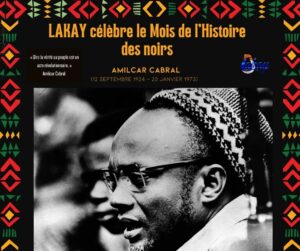
🌱 An intellectual in service to the people
Cabral began his career as an agronomist. Traveling throughout the African countryside, he discovered:
- structural poverty created by colonialism,
- the strength of rural communities,
- the importance of the land as a source of dignity and identity.
This experience instilled a certainty that would guide all his actions:
You cannot liberate a people without deeply understanding them.
✊ The founder of an exemplary revolutionary movement
In 1956, Cabral co-founded the PAIGC (African Party for the Independence of Guinea and Cape Verde).
Under his direction:
- the movement builds schools,
- training for nurses and teachers,
- establishes a local administration,
- and organized one of the most effective anti-colonial struggles of the 20th centuryᵉ century.
As a diplomat, thinker and commander, Cabral managed to rally international support and unite rural populations around a societal project based on justice and dignity.
🔥 A thinker of cultural liberation
For Cabral, the struggle could only succeed if the Africans rediscovered the memory of their values and rejected the complexes imposed by colonization.
His key ideas:
- Culture is a weapon of war.
- Liberation is not only military, it is intellectual.
- The conscience of the people must guide the revolution.
His speeches and writings are still studied today in schools of political science and African studies around the world.
🌍 An immense legacy
Assassinated in 1973, a few months before independence, Cabral did not live to see the final victory.
But his legacy remains colossal:
- a model of disciplined anti-colonial struggle,
- a human-centered vision of development,
- a modern African political thought,
- an example of integrity, humility and courage.
He remains one of the greatest architects of African liberation.
📜 Inspirational quote from Amílcar Cabral
«"Telling the truth to the people is a revolutionary act."»
Nioussérê Kalala Omotunde - The Guardian of Afro-descendant Memory
The Guardian of Afro-descendant Memory
Niussérê Kalala Omotunde (1967–2022), born Jean-Phi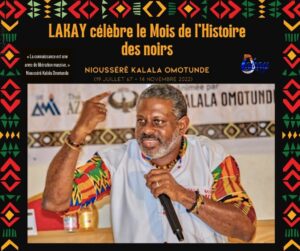 Lippe Corvo is one of the most influential intellectuals of Francophone Afrocentricity. A researcher in African history and civilizations, educator, lecturer, and founder of the Africamaat Institute, he has dedicated his life to restore historical truth and to reconnect Afro-descendant peoples to their ancient roots.
📚 A passionate and rigorous researcher
Initially self-taught and later trained in history and anthropology, Omotunde became a major reference on:
- the civilizations of ancient Africa,
- the African contribution to science,
- the dynamics of the slave trade and slavery,
- Classical African thought.
With more than a dozen books, he creates an accessible documentary base that allows young people, teachers and the entire diaspora to reconnect with a history that is often distorted or erased.
🌍 An educator committed to the African renaissance
Omotunde deeply believed in the necessity of Mastering one's own story to achieve mental liberation.
Through Africamaat, its international conferences, school workshops and media appearances, it has reached thousands of people, from the Caribbean to Africa, via Europe.
His style:
- clear,
- keen,
- pedagogically accessible,
- based on African historical and linguistic sources.
He restored immense pride to an entire generation seeking to understand his legacy.
🔥 A thinker of dignity and emancipation
For Omotunde, African history was not limited to the tragedies of slavery.
He highlighted:
- Ancient Egypt as an African civilization,
- the medieval universities of Timbuktu,
- the kingdoms of Congo, Kemet, Kush, Benin, Ghana,
- African influence on mathematics, astronomy, and philosophy.
He demonstrated that African peoples have been creators of science, empires, knowledge, and spirituality, well before the colonial period.
✨ Legacy
Nioussérê Kalala Omotunde leaves behind:
- an immense undertaking of rewriting and pedagogy,
- a generation of researchers inspired by his method,
- a renewed awareness of Africa's contribution to humanity.
His message remains: Knowing oneself is the key to liberation.
📜 Inspirational quote from Omotunde
«"Knowledge is a weapon of mass liberation."»
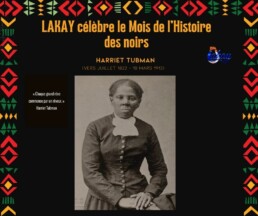
Harriet Tubman - The Moses of African Americans
The Moses of African Americans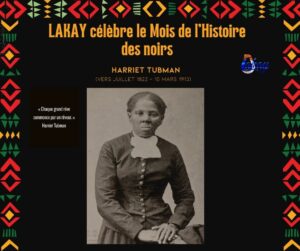
Harriet Tubman (c. 1822–1913) is one of the greatest heroines of liberty. Born into slavery in Maryland, she transformed her life marked by brutality into a destiny of audacity, justice, and liberation.
🔥 From slavery to freedom
After enduring beatings, exploitation and an attempted murder that left her with lifelong injuries, Tubman escaped alone in 1849.
But instead of staying safe, she makes an extraordinary decision: returning again and again to the South to free more enslaved people.
🚇 The Underground Railroad: A Legendary Heroine
Harriet Tubman became one of the most famous "conductors" of the clandestine abolition network.
- She performs approximately 13 missions
- And allows the release of more than 70 people, without ever losing a single passenger.
- She displays exceptional courage: walking at night, crossing marshes, outwitting slave hunters, risking death at every moment.
For her people, she becomes “Moses”, the Moses who opens the path to freedom.
⚔️ During the American Civil War
Tubman is the first woman to lead an American military operation.
It serves as:
- spy,
- nurse,
- scout,
- unofficial commander of strategic operations.
In 1863, she led the Combahee River raid, which freed more than 700 people who had been enslaved.
🌍 Lasting legacy
Harriet Tubman plays:
- absolute determination,
- resistance to injustice,
- Black female leadership,
- faith in a more just world.
His name has become synonymous with courage, altruism, and freedom.
📜 Inspirational quote (attributed to Harriet Tubman)
«"Every great dream begins with a dreamer."»
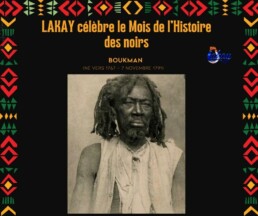
Dutty Boukman: The Priest of Liberty
Dutty Boukman: The Priest of Liberty (born around 1767 – November 7, 1791)
Dutty Boukman (died in 1791) is one of the most powerful symbols of resistance and dignity in Haitian history. Born in West Africa and deported as a slave to Saint-Domingue, he became a spiritual leader and a formidable strategist. His influence extends far beyond his brief involvement in the Haitian Revolution.
🔥 The trigger for the Revolution of 1791
On August 14, 1791, Boukman presided over the famous Bois-Caïman ceremony, a spiritual and political ritual that united slaves around a powerful message:
Slavery is not a destiny, but an oppression that must be broken.
His speech was a call for freedom, justice, and revolt. A few days later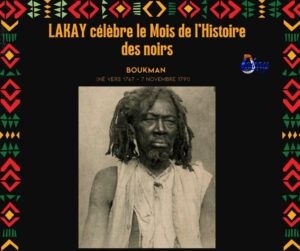 d, the plantations in the North catch fire: the Haitian Revolution begins.
⚔️ A feared leader
- Charismatic leader
- A seasoned guerrilla strategist
- A rallying figure for the insurgents
The colonists considered him one of the major instigators of the uprising. He fell in battle in November 1791, but his death further fueled the determination of the insurgents.
🌍 Legacy
Boukman embodies:
- resistance to oppression,
- spiritual and political unity,
- the certainty that freedom is worth all sacrifices.
He remains one of the great forerunners of Haitian independence and a symbol of African and Afro-descendant courage.
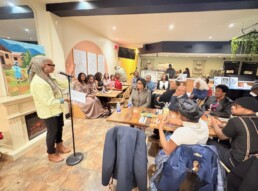
Cabaret “Heritage of the Resistance”: a packed house at Café Manioky to celebrate resistance and creation
Repentigny — Café Manioky resonated with the rhythms of memory, art, and powerful voices during the cabaret “Legacy of the Resisters,” presented as part of Black History Month. Before a packed house, the event brought together citizens of the region around a shared theme.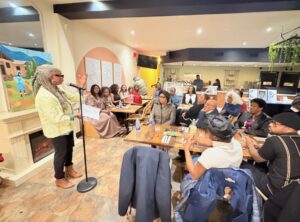 If clear: to create a space for meeting and reflection on the resistance of black people, while highlighting the creativity of youth and the power of the arts as tools for raising awareness.
At the heart of the evening, several poetry readings resonated deeply with the audience. Texts addressing racism, exclusion, and human dignity—written by young people as part of the “My Pen Against Racism” competition—were read aloud by the young people present, offering lucid, moving, and resolutely forward-looking voices. Through their words, these young people reminded us that literature and speaking out can become acts of resistance, capable of breaking the silence and opening up dialogue.
The program also featured a lecture by Marie Célie Agnant on the theme of resistance. In a presentation praised for its depth, she addressed resistance as an essential response to violence and systems of dehumanization, emphasizing the importance of naming realities, understanding the mechanisms of racism, and equipping oneself with the tools to act. Her message stressed a fundamental lever: education, historical knowledge, and the development of critical awareness to transform struggles into lasting action.
For Pierre Richard Thomas, director of LAKAY, this evening demonstrated precisely that resistance is also built in places of culture and gathering: «To resist is not just to denounce. It is to stand up, to educate oneself, to create spaces where our young people can speak, write, be heard, and build pride. Tonight, seeing the hall full and the young people speaking out, we understand that resistance is alive and well: it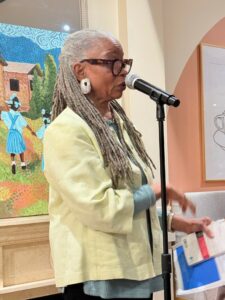 It is passed on, learned, and shared.»
The event is part of the regional Black History Month initiative in Lanaudière, coordinated by the Lanaudière Black History Month Roundtable. Throughout the month, the Roundtable and its partners offer several activities in various municipalities across the region to celebrate heritage, strengthen community ties, and foster meaningful dialogue about the issues faced by Black communities.
With enthusiastic participation and a packed house, “Legacy of the Resistance” confirms the importance of fostering more cultural and civic spaces where people can listen, learn, create, and reflect together. The public is invited to follow the program of upcoming activities for Black History Month in Lanaudière and to continue to keep alive, through their presence and solidarity, a memory focused on justice and the future.
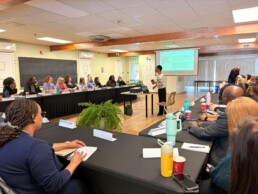
Mental health of Black communities: LAKAY equips service providers in Lanaudière
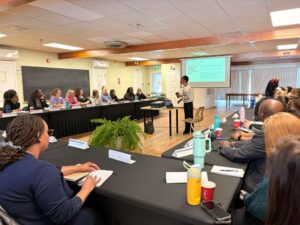 Today, LAKAY held a workshop in Repentigny for stakeholders in the Lanaudière region, focusing on the specific challenges faced by Black communities. This activity is part of LAKAY's project, funded by the Government of Canada through the federal program "Promoting Equity in Health: Black Community Mental Health Fund," which supports culturally appropriate community initiatives aimed at improving access to and equity in mental health for Black people.
Led by Dr. Michael Obas, psychologist, the meeting brought together professionals from different backgrounds to reflect on intervention practices and strengthen the tools available in the field.
At the heart of the discussions: the daily realities faced by Black people in accessing services, stigmatization, and the effects of systemic racism on psychological well-being. The speaker emphasized the importance of culturally safe interventions that acknowledge the social, historical, and cultural dimensions that shape the expression of distress, trust in institutions, and the healthcare journey.
«"Mental health cannot be understood out of context. We cannot separate individual suffering from the collective conditions that fuel it: experiences of discrimination, chronic stress, isolation, performance pressure, or even migratory bereavement," recalled Dr. Obas, inviting organizations to adapt their approaches to better reach the people concerned.
For LAKAY, the workshop is part of a broader effort to train, raise awareness and equip intervention settings in the region, so that the services offered are more accessible, more humane and more relevant to the entire population, in accordance with the objectives of the federal program.
Statement from Pierre Richard Thomas, Director of LAKAY: «We felt a real openness from the participants this morning. When we talk about the mental health of Black communities, we are also talking about trust, dignity, and cultural safety. Our goal is to build bridges between the community and services, so that people no longer have to choose between remaining silent or feeling misunderstood. This workshop, funded with the support of the Government of Canada, is a concrete step towards fairer and more effective practices in Lanaudière.»
LAKAY thus continues its commitment to strengthening the capacity of communities and supporting a mental health approach that recognizes the lived reality of communities, while promoting collaboration between community organizations and professional services.