
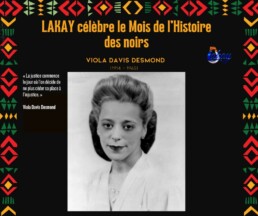
Viola Davis Desmond – A pioneer of civil rights in Canada and a symbol of quiet courage
Viola Davis Desmond (1914 – 1965) 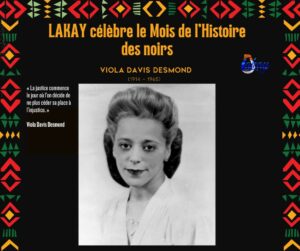
This woman showed great bravery by challenging racial segregation in a movie theater in New Glasgow, Nova Scotia.
On the occasion of the Black History Month, Viola Desmond has emerged as one of the most important — and long overlooked — figures in the fight for equality in Canada.
His story reminds us that resistance doesn't always need shouts: sometimes, A simple refusal is enough to disrupt an entire system.
✊🏾 A simple gesture that becomes a historic act
In 1946, in Nova Scotia, Viola Desmond — a successful Black entrepreneur and respected businesswoman — sat in a section reserved for whites in a New Glasgow movie theater.
Refusing to leave her seat, she was arrested, imprisoned and convicted, not for "civil disobedience", but for a false tax pretext used to mask racial segregation.
This gesture, made nine years before Rosa Parks's, sparked one of the first major civil rights battles in Canada.
🌍 A woman who breaks the silence surrounding Canadian racism
The ensuing trial highlighted systemic discrimination against Black communities.
With courage, Viola Desmond and her allies challenged the injustice in court, paving the way for a movement that would resonate far beyond Nova Scotia.
Her story is a reminder that Canada, too, has experienced segregationist laws and practices — and that Black women have risen up to challenge them.
🔥 A legacy of dignity, recognized late but celebrated today
It will take several decades for the country to fully recognize his courage.
In 2010, She receives a posthumous pardon, the first official government recognition for a conviction related to racial discrimination.
And in 2018, Viola Desmond becomes the first Canadian woman (other than a member of the royal family) to appear alone on a banknote — the banknote of 10 $.
A powerful symbol for the entire African Canadian community.
🌟 A timeless inspiration for Black History Month
Viola Desmond plays:
- there individual resistance,
- THE moral courage,
- there dignity in the face of injustice,
- the importance of standing up — or staying seated — when human rights are at stake.
His life teaches us that every gesture counts, and that quiet acts of courage can transform entire nations.
✨ Quote inspired by his heritage
«"Justice begins the day we decide to no longer give way to injustice."»
(A free paraphrase inspired by his struggle.)
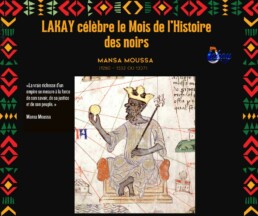
Mansa Musa, Emperor of Mali, builder of prosperity and symbol of African excellence
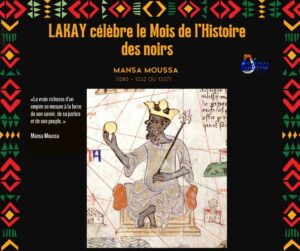 Mansa Moussa (Mansa Musa or Kankou Moussa (1280 – 1332 or 1337)
Emperor of Mali, builder of prosperity and symbol of African excellence
On the occasion of the Black History Month, Mansa Musa shines as one of the most extraordinary figures in African history. Emperor of Mali in the 14th centuryᵉ century, it is often described as one of the richest and most powerful men who ever lived, but his legacy goes far beyond mere wealth: he embodies the grandeur, creativity and global influence of African civilizations.
✊🏾 A visionary ruler in the heart of medieval Africa
Mansa Musa reigned over a flourishing empire, which stretched across much of West Africa.
Under his leadership, Mali became a major center:
- trade,
- to know,
- culture,
- and spirituality.
It shows the world that medieval Black Africa was a space of power, innovation and prosperity — far from widespread clichés.
🌍 A pilgrimage that impresses the world
In 1324, his famous pilgrimage to Mecca transformed Mali's image internationally.
Accompanied by thousands of people, generously distributing gold, Mansa Musa impressed the kingdoms he crossed.
It revealed to the Muslim world and medieval Europe the existence of a prosperous, organized and cultured African kingdom.
His visit was so significant that it brought about, for the first time, the appearance of the name of Mali and its wealth on European maps.
📚 A builder of knowledge and culture
During his reign, cities like Timbuktu And Gao become renowned intellectual centers.
Mansa Moussa built mosques, schools, libraries, and encouraged scholarly exchanges.
The city of Timbuktu, in particular, became a beacon of knowledge, attracting students and scholars from all over the Muslim world.
He leaves behind an immense legacy: that of a learned, refined and powerful Africa.
🔥 A symbol of pride for Black History Month
Today, Mansa Musa is celebrated not only for his material wealth, but also for:
- her political audacity,
- its cultural vision,
- her spiritual leadership,
- and its capacity to project Africa onto the world stage.
He points out that black people built empires, led remarkable intellectual centers, influenced the world economy and made their mark on universal history long before the modern era.
Mansa Moussa embodies an essential truth of Black History Month:
Africa has not only resisted — it has shone, innovated and led.
✨ Quote inspired by his heritage
«"The true wealth of an empire is measured by the strength of its knowledge, its justice, and its people."»
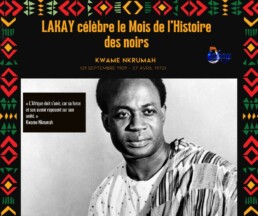
Kwame Nkrumah - The father of modern political Pan-Africanism
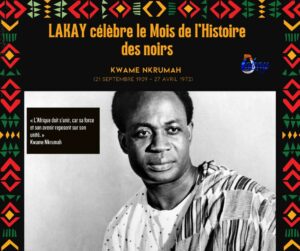 Kwame Nkrumah (September 21, 1909 – April 27, 1972)
Nkrumah leads his country to independence March 6, 1957, making Ghana the the first nation in sub-Saharan Africa to break free from colonial rule. For millions of Africans, this event is not just a national victory: it is a signal of hope, proof that colonial domination can be overthrown.
His leadership is guided by a deep conviction:
No people can be free while others remain oppressed.
🌍 The father of modern political pan-Africanism
Nkrumah dreamed of a united, strong, and cohesive Africa.
He plays a central role in the creation of the’Organization of African Unity (OAU) in 1963, the precursor to the African Union.
It encourages newly independent countries to cooperate, to achieve economic emancipation and to value their cultural heritage.
For Nkrumah, African unity is not a utopia, but a historical necessity.
🔥 A legacy for the Black world
Kwame Nkrumah remains a symbol of:
- determination,
- strategic vision,
- Black pride,
- resistance to injustice,
- faith in the African renaissance.
His ideas inspired leaders such as Julius Nyerere, Patrice Lumumba, Haile Selassie, and continue to fuel contemporary struggles for social justice, sovereignty, and emancipation.
During Black History Month, his legacy reminds us that freedom is not achieved solely through breaking with the past, but through building a collective future.
✨ Quote inspired by his message
«"Africa must unite, because its strength and its future depend on its unity."»
(Paraphrase inspired by his Pan-African speeches.)
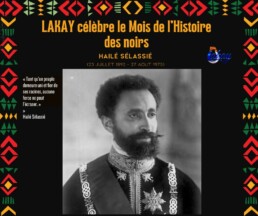
Haile Selassie I, Emperor of Ethiopia, symbol of African resistance and major figure of Pan-Africanism
Haile Selassie I, Emperor of Ethiopia, symbol of African resistance and major figure of Pan-Africanism
(1892 – 1975)
Haile Selassie I, the last emperor of Ethiopia, remains an emblematic figure of African dignity, of the sovereign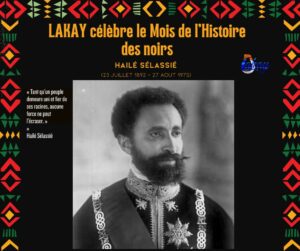 summer and the fight against oppression.
As part of the Black History Month, He occupies a key position as a visionary leader, defender of freedom, and spiritual father of a global Black pride movement.
✊🏾 A sovereign who made his country a symbol of freedom
At a time when almost the entire African continent was under colonial rule, Haile Selassie led one of the only African nations to have remained independent.
During Mussolini's fascist invasion in 1935, he became the face of African resistance. His impassioned appeal to the League of Nations to denounce Italian aggression made him a universal voice against oppression and injustice.
His courage and dignity in the face of adversity transformed Ethiopia into A symbol of resilience and freedom for Black people worldwide..
🌍 A pillar of Pan-Africanism
Haile Selassie played a decisive role in building African unity.
In 1963, he hosted the continent's leaders in Addis Ababa to found the’Organization of African Unity (OAU), the ancestor of the current African Union.
His ambition: to see African nations unite, cooperate and definitively free themselves from the systems inherited from colonization.
Her leadership makes her one of the great voices of African identification, solidarity and emancipation.
🔥 A spiritual icon for the diaspora
Beyond his political role, Haile Selassie became a major spiritual figure for the black diaspora, particularly in the Rastafari movement, which considers him a symbol of liberation, African renaissance and a return to dignity.
Its existence embodies a living link between Africa and the Afro-descendant peoples dispersed by history.
🌟 A legacy that lives on
Haile Selassie's journey reminds us that the struggle for freedom is simultaneously a political, moral, and spiritual battle.
During Black History Month, his name resonates as a call to:
- to defend African sovereignty,
- to honor the shared heritage of Black people,
- and to believe in the collective capacity to build a just and dignified world.
He remains a figure of wisdom, courage and determination — a beacon for all those who pursue the quest for justice, unity and freedom.
✨ Quote inspired by his message
«"As long as a people remains united and proud of its roots, no force can crush it."»
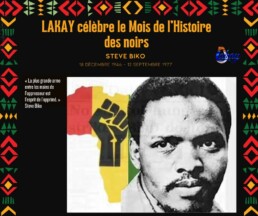
Steve Biko – Pioneer of Black Consciousness and symbol of South African resistance
On the occasion of the Black History Month, Steve Biko stands out as one of the most prominent figures in the fight against apartheid and one of the most powerful thinkers on Black dignity. Activist, humanist, and visionary, he breathed new life into the oppressed peoples of South Africa by reminding them of this essential truth:
Liberation begins in the mind. 
✊🏾 A thinker who gives Black people back control of their destiny
In the 1970s, Biko founded the movement of the Black Consciousness, a movement that awakens pride, self-esteem and dignity within black communities crushed by apartheid.
His message was clear, direct, and profoundly revolutionary:
As long as a people perceives itself as inferior, the oppressor has already won.
Biko encourages young people, students, workers and communities to recognize their worth, to refuse submission and to stand up mentally, even before standing up politically.
🌍 The courageous voice of an awakened youth
Under the brutal surveillance of the South African regime, Biko became a symbol of defiance.
His courage inspires young people who see in him a fraternal figure, an intellectual guide, a beacon in the night of apartheid.
His influence was decisive in the Soweto uprising of 1976, a historic mobilization that shook the world and exposed the violence of the regime.
🔥 A martyr for freedom
Arrested and tortured by the South African police, Steve Biko died in custody in 1977, at only 30 years old.
But his disappearance transforms his name into a rallying cry.
Through his sacrifice, he became an international figure of resistance, a source of inspiration for generations of African and Afro-descendant activists.
🌟 A living legacy for Black History Month
Today, Steve Biko remains a symbol of:
- moral resistance,
- identity affirmation,
- psychological release,
- Black pride,
- courage in the face of tyranny.
Her message resonates particularly during Black History Month, a time when we honor the women and men who refused to submit to injustice, and who paved the way for dignity and emancipation.
Biko reminds us that External freedom cannot exist without internal freedom — an essential lesson for all communities that continue the fight for equality and justice today.
✨ Iconic quote (authentically attributed)
«"The greatest weapon in the hands of the oppressor is the spirit of the oppressed."»
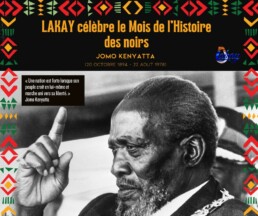
Jomo Kenyatta - The father of the Kenyan nation and the path to African dignity
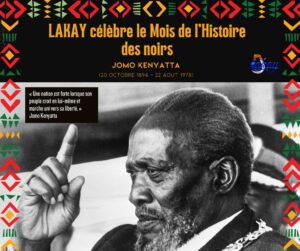 On the occasion of the Black History Month, Jomo Kenyatta stands out as one of the most emblematic figures of the African renaissance. The first president of independent Kenya, he dedicated his life to liberating his people from colonial domination and restoring the dignity of Black people in a world that had too often silenced them.
✊🏾 A voice for African freedom
Kenyatta established himself very early on as a strong voice of African nationalism.
Activist of the Kenya African Union, He tirelessly defends the right of Africans to govern their own land and to write their own history.
Imprisoned during the Mau Mau uprising, he became a living symbol of resistance, a leader whom even chains could not silence.
His courage reminds us, even today, that the struggle for freedom requires determination, sacrifice and unity.
🌍 A craftsman of unity and reconstruction
Upon his release, Kenyatta led his country towards independence and became the first president of Kenya.
His leadership rests on three essential pillars:
- national unity,
- reconciliation between communities,
- and the building of a future based on dignity and self-confidence.
He encourages Africans to believe in their abilities, to value their identity and to take charge of their own development.
🔥 A legacy for generations of the Black world
In the context of Black History Month, the figure of Jomo Kenyatta resonates with particular force.
He embodies the African renaissance, the fierce will to break with oppressive systems and the aspiration for a world where freedom, pride and self-determination are no longer dreams, but realities.
His legacy reminds us that the emancipation of black people comes through knowledge of their history, the celebration of their cultures and the deep conviction that Africa has the strength to forge its own path.
✨ Quote inspired by his message
«"A nation is strong when its people believe in themselves and march united towards their freedom."»
Marcus Garvey - The visionary of Black pride and world unity
On the occasion of the Black History Month, Marcus Garvey has established himself as one of the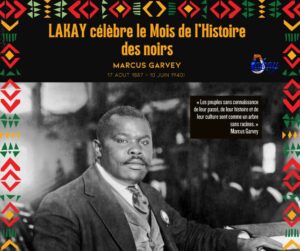 One of the most powerful voices of the Black renaissance. A Jamaican visionary, identity builder and fierce defender of human dignity, he made history by calling on Black people around the world to unity, pride and self-determination.
✊🏾 A visionary who awakened millions of consciences
Founder of the’UNIA (Universal Negro Improvement Association), one of the largest black organizations of the 20thᵉ In the 19th century, Garvey preached global solidarity, the appreciation of African cultures, and economic emancipation.
He asserts that black people must rise up, get to know each other, organize themselves and believe in their own power.
His message is a vibrant appeal: To break free begins with recognizing oneself as worthy and capable..
🌍 A unifying voice for the African diaspora
Marcus Garvey was one of the first to propose a comprehensive vision:
a united diaspora, proud of its roots and aware of its collective strength.
His dream of a black people standing tall inspired future leaders of Pan-Africanism and fueled liberation movements in Africa, the Americas, and the Caribbean.
Its slogan — One God, One Aim, One Destiny — still resonates like a song of unity.
🔥 A powerful legacy for today
Through his actions and words, Garvey lit a flame that continues to burn brightly:
that of black pride, historical consciousness, and resistance to injustice.
It reminds us that understanding our roots, honoring our ancestors, and embracing our identity are revolutionary acts.
His legacy still guides generations who fight for equality, autonomy, and justice.
✨ Iconic quote from Marcus Garvey
«"Peoples without knowledge of their past, their history, and their culture are like a tree without roots."»

Rosa Parks - The woman whose courage set a country in motion
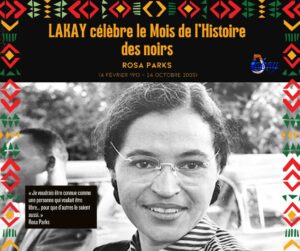 Rosa Parks is one of the most iconic figures in the fight for equality and dignity for Black people in the United States. Her simple yet profoundly courageous act of 1ᵉʳ December 1955, In Montgomery, he became a global symbol: that of an ordinary person capable of triggering extraordinary change.
✊ The silent courage of a woman standing even when seated
When Rosa Parks refused to give up her seat on a bus to a white passenger, she was not just breaking an unjust rule: she was affirming the worth and full humanity of millions of black people humiliated by segregation.
His gesture, made with calm and dignity, reminds us that resistance can take the simplest form: saying No.
🔥 The spark of a historic movement
His arrest provokes the Montgomery bus boycott, a movement that lasted more than a year and marked a turning point in the history of civil rights.
Around his act, thousands of people rallied, and a young pastor, Martin Luther King Jr., emerged as a national leader.
Rosa Parks then became the face of peaceful resistance and moral strength.
🌍 A legacy that transcends borders
Rosa Parks never sought to be a heroine.
But his determination, his rejection of injustice, and his unwavering faith in human dignity transformed the course of history.
She reminds us that courage is not the absence of fear: It's the decision to do what's right, despite the fear..
Her legacy resonates today in all struggles for equality, social justice, and human rights. Rosa Parks embodies the immense power of an individual act which, when performed at the right time, can awaken a nation.
📜 Iconic quote
«"I would like to be known as someone who wanted to be free... so that others might be free too." Rosa Parks
The man who transformed struggle into freedom
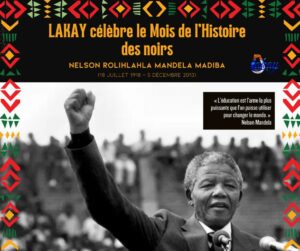 Nelson Rolihlahla Mandela (1918–2013) is one of the most respected figures in contemporary history. Leader of the struggle against apartheid, political prisoner for 27 years and first black president of South Africa, he embodies hope, resilience and the ability to transform pain into a path of peace and justice.
His name has become universal: synonymous with moral courage, human dignity and shared freedom.
✊ A tireless fighter against injustice
Mandela joined the African National Congress (ANC) to oppose the apartheid system, which imposed brutal segregation on the country's black majority.
He initially advocated non-violent struggle, then, faced with fierce repression, participated in the creation of Umkhonto we Sizwe, the armed wing of the ANC, to resist oppression.
His commitment is based on a deep conviction:
No one should be oppressed, neither because of their race nor because of their social status.
⛓️ 27 years in prison: the birth of a moral leader
Arrested in 1962, Mandela was sentenced to life imprisonment.
During 27 years old, Imprisoned on Robben Island and later in other penitentiaries, he endured:
- forced labor, isolation, humiliation, the deprivation of fundamental rights.
But he never wavered.
On the contrary :
- he learns, He thinks, he grew up and it becomes a moral beacon.
The prisoner becomes a global symbol of freedom.
🕊️ The art of transforming pain into reconciliation
Released in 1990, Mandela made a choice that would mark history:
He refuses revenge.
He understands that lasting peace comes through reconciliation, not revenge.
With wisdom and courage, he guided South Africa towards the official end of apartheid and towards the building of a democratic state.
In 1994, he became the country's first black president, elected in the first multiracial elections.
🌍 A universal heritage
Mandela is recognized as:
- a champion of peace,
- an advocate for social justice,
- an architect of reconciliation,
- an inspiration to liberation movements around the world.
Awarded the Nobel Peace Prize in 1993, he devoted the rest of his life to:
- the fight against poverty,
- the promotion of education,
- the defense of children,
- health and global justice.
His legacy transcends borders:
Mandela belongs to all of humanity.
✨ A beacon for Black History Month
Nelson Mandela reminds us:
- that freedom can be born from suffering, that dignity is an inalienable right, that justice is not only a political struggle, but an act of love, that a single individual can inspire an entire planet.
It invites us to believe in a more just, more humane and more united world.
📜 Inspirational quote from Nelson Mandela
«"Education is the most powerful weapon which you can use to change the world."»
The Liberation Theorist and the Physician of the Colonized Soul
Frantz Fanon (1925–1961) is one of the most influential thinkers of the 20th century.ᵉ century. Psychiatrist, essayist, revolutionary and humanist, he profoundly influenced anti-colonial struggles, liberation movements and Afro-diasporic thought.
Through his major works — Black skin, white masks And The Wretched of the Earth — he analyzes the mechanisms of colonization and proposes a radical path towards psychological and political liberation.
For the Black world, Fanon remains a intellectual beacon, a guide to dignity and conscience.
✊ A clear mind in the face of oppression 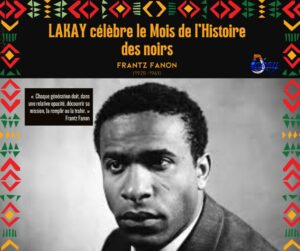
Born in Martinique and educated in humanist thought, Fanon became involved very early on in the fight against injustice.
By observing the psychological wounds of racism and colonial violence, he understands that:
- Domination destroys the mind as much as the body.,
- Dehumanization is taking hold in people's minds.,
- Liberation must be total: economic, political, mental and cultural.
His thinking highlights the profound impact of discrimination on Black identity.
🧠 The psychiatrist who transformed the political struggle
In Algeria, where he worked as chief physician, Fanon observed the traumas caused by the colonial war.
He developed a revolutionary approach there:
- Healing comes through regaining dignity.,
- Resistance is a therapeutic act.,
- Collective struggle strengthens self-esteem.
His work links psychology, history, and politics in a comprehensive vision of emancipation.
🌍 A champion of Pan-Africanism and world freedom
Fanon actively joined the struggle for Algerian independence and became one of the intellectual voices of liberation movements in Africa and in the black diaspora.
He argues:
- the right of peoples to self-determination,
- solidarity between colonized nations,
- the end of all forms of exploitation,
- the renaissance of African and Afro-descendant cultures.
Its influence extends to the Caribbean, the United States, Africa, and Latin America.
🔥 A legacy that still lives on
Having died at only 36 years old, Fanon left behind a body of work of exceptional power.
His analysis of racism, colonial violence, the construction of identity, and resistance continues to inspire:
- Afro-diasporic thinkers,
- human rights activists,
- contemporary social movements,
- researchers in psychology, politics and sociology.
His message remains a call for courage, clarity, and transformation.
✨ A beacon for Black History Month
Frantz Fanon reminds us that:
- Freedom begins in the mind.,
- Oppression is never natural.,
- Black identity is a creative force,
- The truth can change history.,
- Every people has the fundamental right to liberate itself.
He remains an essential figure for understanding human dignity and Black struggles throughout the world.
📜 An inspiring quote from Frantz Fanon
«"Each generation must, in relative obscurity, discover its mission, fulfill it, or betray it."»